

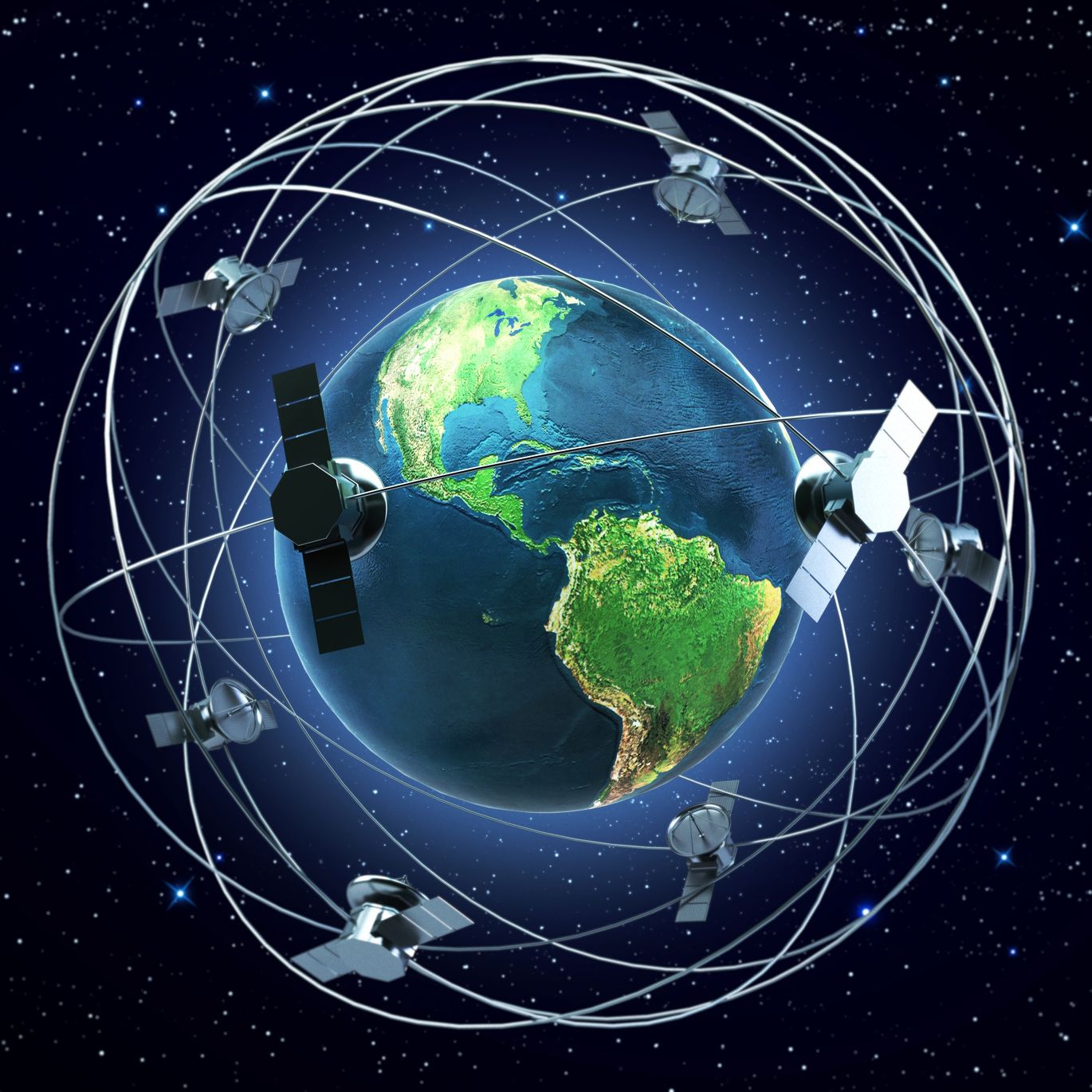
Artist’s rendition of satellites orbiting the Earth – rottenman/123RF Stock Photo
Despite the impacts of the continuing pandemic, 2021 witnessed the largest number of objects launched into space in a single year. According to the United Nations Office of Outer Space Affairs Online Index of Objects Launched into Outer Space, there were 1,807 objects launched, which is 41% greater than the previous record set in 2020!
A lot of these launches were from a relatively small number of operators, particularly the burgeoning internet broadband suppliers and growing Chinese presence in space. The end of the year was no different with 36 OneWeb satellites being launched on the 27th December, and two days later the Chinese put the Tianhui-4 Earth Observation satellite into space. Of course, we can’t talk about of end of 2021 without an honourable mention for the Christmas Day launch of the James Webb Space Telescope from Europe’s Spaceport in French Guiana! How many of you spent Christmas morning watching the live ESA feed like we did?
Turning to 2022, it already looks like it will be another potentially record breaking year for launches and again the numbers will be dominated by the existing players:
- SpaceX’s Starlink have their first launch of the year on Thursday 6th January with 53 satellites due to go into orbit. Although Space X slowed down their launches in the 2nd half of 2021, due to them moving to the next generation of satellites, it is anticipated that they will again have regular launches through the year.
- SpaceX’s Falcon rocket is expected to have 30 to 40 launches this year, and whilst some will be for Starlink, there will launches such as the Smallsat RideShare Program which has its first launch of the year on the 13th January with over 70 satellites scheduled including 44 Planet Dove EO satellites.
- OneWeb looks like it will have a busy year with seven launches a scheduled before September, aiming to put 250 satellites into orbit. Their end-of-year program is not clear yet.
- Indian Space Research Organisation (ISRO) is expecting more launches this year, after a slow 2021, which should include:
- RISAT-1A – C-Band SAR EO satellite with a focus on soil moisture, flood monitoring, and other mapping applications.
- Oceansat-3 is an EO satellite focussing on ocean colour, sea surface temperature and wind vector measurements.
- Microsat 2A is a small EO satellite focussing on mapping for urban and rural management, coastal land use, utilities mapping, and other GIS applications.
- China is expected to launch regularly through the year, although their schedule is less known. Already, a number of EO satellites expected to be launched including Jilin Gaofen -3D and 04A, Hainan, Tianxian, and Xingshidai.
Other notably EO launches to look out for over the coming 12 months include:
- BlackSky Global, Capella Space, ICEYE and Satellogic all have scheduled launches to complement and enhance their existing EO constellations.
- Maxar’s WorldView Legion 1 and 2, which are the start of an expected six satellite constellation with sub 30 cm spatial resolution.
- National Oceanic & Atmospheric Administration (NOAA)’s GOES-T weather satellite.
- Italian Space Agency’s COSMO-SkyMed radar satellite CSG-2.
- Japan Aerospace Exploration Agency’s (JAXA) Advanced Land Observation Satellite 3 (ALOS-3) a high resolution optical satellite.
- NASA have four key EO launches planned:
- Time-Resolved Observations of Precipitation structure and Storm Intensity with a Constellation of Smallsats (TROPICS) – this begs the question whether the mission name or acronym came first! – will be a six satellite constellation to provide improved and rapid measurements of tropical cyclones.
- Earth Surface Mineral Dust Source Investigation (EMIT) will monitor mineral dust in the atmosphere from an imaging spectrometer aboard the International Space Station.
- NOAA’s Joint Polar Satellite System -2 (JPSS-2) will help predict extreme weather conditions including floods, wildfires, volcanoes and more.
- Surface Water & Ocean Topography (SWOT) will evaluate the world’s oceans and their role in climate change, as well as monitoring lakes, rivers, and other surface waters.
There will be a lot of other EO launches during the year, and we’ll try and keep you updated with them as they happen.
Finally, there will be in a lot of interest in the moon this year with NASA, JAXA, ISRO, Russia’s Roscosmos, Korean Aerospace Research Institute and the United Arab Emirates Lunar Mission all planning lunar missions!
One thing is for certain, the space industry looks like it is going to have a busy 2022!
