

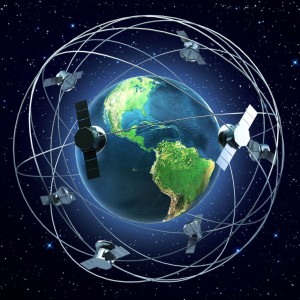
Artist’s rendition of satellites orbiting the Earth – rottenman/123RF Stock Photo
‘In space, no-one can hear you scream’ according to the film Alien, and whilst that might be true when things go wrong in space there may well be a few audible screams down here on Earth specifically from the insurance industry.
Similar to car insurance in the UK, the only compulsory part of satellite insurance is third party liability. However, the insurance industry offers three other products or types of cover for satellites:
- Pre-launch insurance – covers the point after the satellite leaves the manufacturer up until the launch vehicles engines are ignited for the actual launch.
- Launch insurance – covers the point from which the launch vehicle engines are ignited either to the point of the satellite going into orbit, or the end of the testing phase in orbit.
- Operational Insurance – which covers the satellite for the time it’s in orbit.
According to the article ‘Estimating Satellite Insurance Liabilities’ published by Gould & Linden in 2000, launch insurance is the area of greatest risk. At that time, their figures indicated around 7% of launches failed, and a further 5% of satellites failed in the early months of their life in orbit.
The first satellite insurance was placed with Lloyd’s of London in 1965, and this was pre-launch insurance for the first commercial communications satellite, Intelsat I, to go into geosynchronous orbit; it was a small satellite weighing around 34.5 kg and was launched on April 6 1965. Despite this early policy, the satellite insurance market did very little business for the next twenty years until commercial satellites began to come into the industry. As we know, this has expanded rapidly over the last decade with the rapid increase in the development of smaller satellites.
Satellites tend to be expensive to build and launch, although costs are coming down with the smaller satellites, so the potential insurance payouts can be in the hundreds of millions of dollars. As such, whilst one insurer may take on the policy it will reinsure with a number of other insurance companies to spread the risk to a more acceptable level. This means there are often a number of insurers involved in one satellite insurance policy.
Satellite insurance has been in the news this year due to a number of high profile launch failures:
- Last week it was reported a Chinese telecoms satellite, ChinaSat-18, did not reach its intended orbit due a reported solar array issue, effectively ending its mission as the satellite’s batteries will now be depleted meaning its impossible to contact it. It’s reported as being insured for $250 million by the People’s Insurance Company of China and reinsured internationally.
- FalconEye-1, the United Arab Emirates remote sensing satellite that we discussed earlier this year, was on the failed Vega rocket launch in July was insured for $415 million – reported as being the largest ever loss in the space market.
- Maxar Technologies’ WorldView-4 imaging satellite suffered a failure in its control moment gyros in January this year preventing it from collecting satellite data. The satellite was launched in November 2016, but this issue caused the end of the mission. It was insured for $183 million, which was claimed from its insurers.
With three major claims this year already, it has been a bad year for the satellite insurance industry with payouts exceeding premiums received. Swiss Re, the world’s second-largest reinsurer, reported last month that they were pulling out of the satellite insurance market with immediate effect.
Given there are only a limited number of worldwide satellite insurers it will be interesting to see if more will follow Swiss Re. Clearly, there is still a growing market for the launching of smaller satellites, and when you add into the mix the potential for space tourists in the next couple of years, space insurance will need to evolve as the technology does.
Finally, on the topic of what happens when things go wrong, last month it was reported that NASA was investigating the first alleged crime committed in space. Like the high seas and Antarctica, space is considered as belonging to everyone and belonging to no-one, although this does not mean there are no laws.
Space is governed by five main treaties, managed by the United Nations Office of Outer Space Affairs and crime is covered in the Outer Space Treaty. Essentially, it means people who commit crimes in space are subject to the law of the country of which they are a citizen. Again, with the advent of space tourism, there may be a lot more happening in this area in the coming years.
Whilst no-one can hear you scream in space if you’re close to the insurance capitals of the world you may well hear some anguished cries if a satellite fails!
