

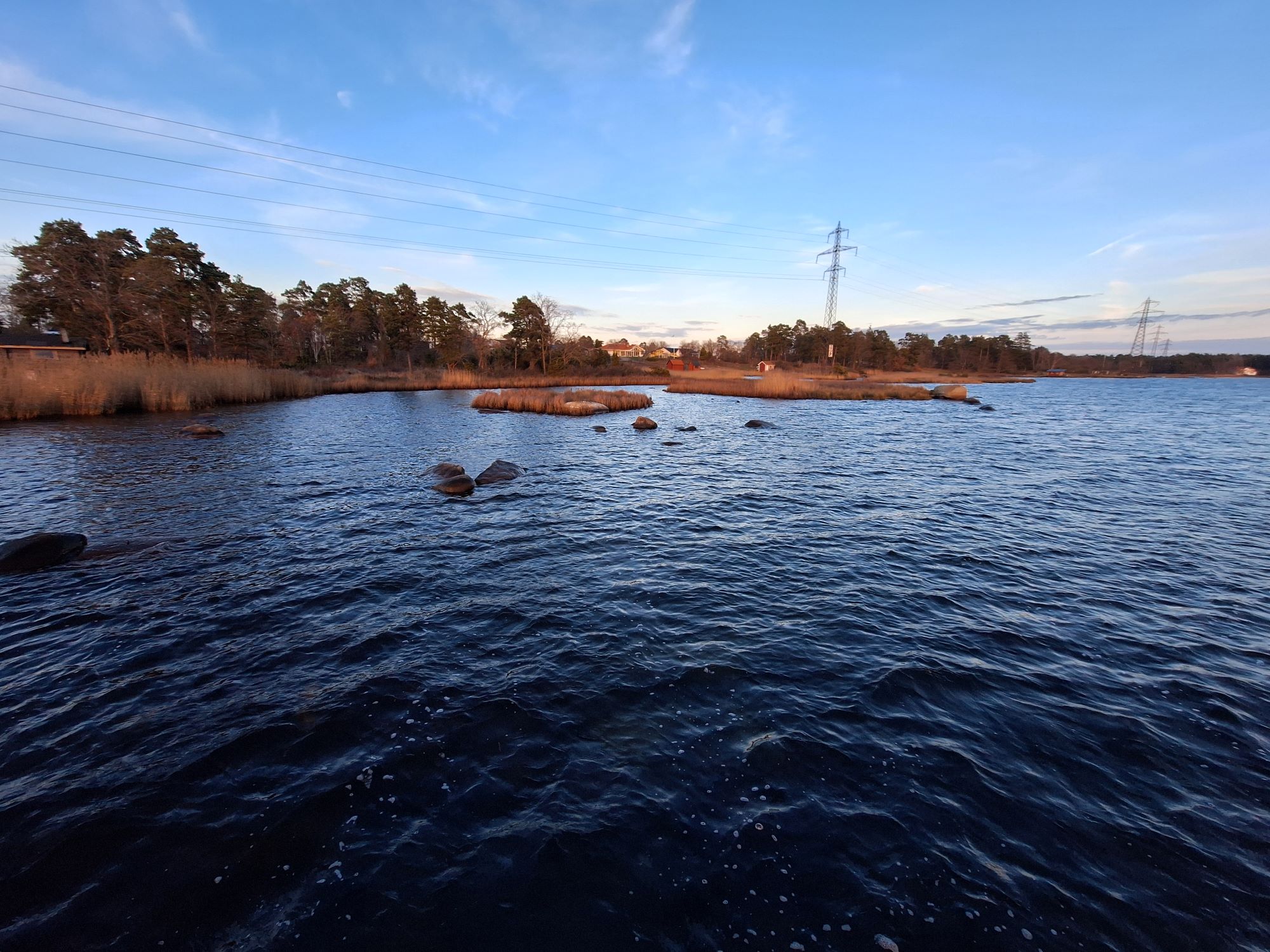
Coastal waters with seaweed near in Drag in the Kalmar Strait, Sweden
I’m currently on the first part of a two country Scandinavian Winter Road Trip for Pixalytics. I’m in Sweden working on the SwedCoast-BlueCarb project that is funded by the Swedish and UK Space Agencies and aims to use a combination of Earth Observation and in situ data to map submerged vegetation, including eelgrass, around Kalmar and on the Swedish West Coast. I began my time in Sweden in Kalmar attending the Swedish Society for Marine Sciences’ Marine Research Days 2024, which took place between the 26th and 28th November, and the theme of the event was ‘Building bridges across marine disciplines’.
The conference showcased research from across Sweden, including physical, biological and chemical marine research. The event began with an invited presentation by Inga Koszalka from Stockholm University on Lagrangian modelling that included wind drift and turbulent dispersion to simulate the dispersal of algal blooms in the Baltic Sea. The cyanobacteria (blue-green algae) blooms that occur here are not only a nuisance to humans but are more broadly considered a hazard as they affect marine life and coastal activities.
Further talks on that first day included eutrophication in the Baltic Proper, focusing on the impact of nutrients such as nitrogen and phosphorus, with phosphorus being leached by the seabed in the summer. Then we moved to forams (long name Foraminifera, which are single-celled organisms with hard shells) as predictors of pollution with non-indigenous species from Asia found, likely coming from sources such as ballast water. We also moved to the Arctic in the polar winter, where there is, maybe surprisingly, marine carbon fixation; this is by organisms that use chemical reactions rather than light to generate energy, and these organisms are often inhibited by light, so they have to live deep below the light in the summer – involved in this is Archaea, which is the oldest life-form known to exist. We also heard about phages, viruses that feed on bacteria, causing them to burst, which can be a significant cause of phytoplankton death.
On the second day, I gave a presentation titled ‘SwedCoast-BlueCarb project: mapping eelgrass extent and health’ together with Dr Susanne Kratzer from Stockholm University who leads the Swedish side of the project. The presentation described the work we’d been doing so far and the upcoming plans. This second day also included a presentation on mangroves as a coastal store of blue carbon, locking it into the sediments. Vietnam lost a large percentage of its mangroves historically and has been recently working on restoring them. It was found older, rather than replanted or naturally regenerated, mangrove-dominated areas have higher sedimentation rates, and there has been a change in the source of organic carbon – from phytoplankton to inland sources, probably due to damming activities.
Once again, the importance of sharing data so that we can collect data once and use it multiple times was highlighted by a presentation, describing that while there are locations where data can be shared it’s important to have the required metadata so it can also be found. This links to the Findable, Accessible, Interoperable and Reusable (FAIR) principles we’ve talked about in a previous blog.
Finally, there was also a talk on macrophytes (plants that tend to dominate wetlands, shallow lakes, and streams) in the Northern Baltic – as the salinity is low, especially due to significant riverine input – as we progress further North the underwater vegetation in the Baltic changes from marine to freshwater plants. This was interesting for our project, and so in the SwedCoast-BlueCarb project we are also going to look at mapping these plants as they act as a filter for pollution.
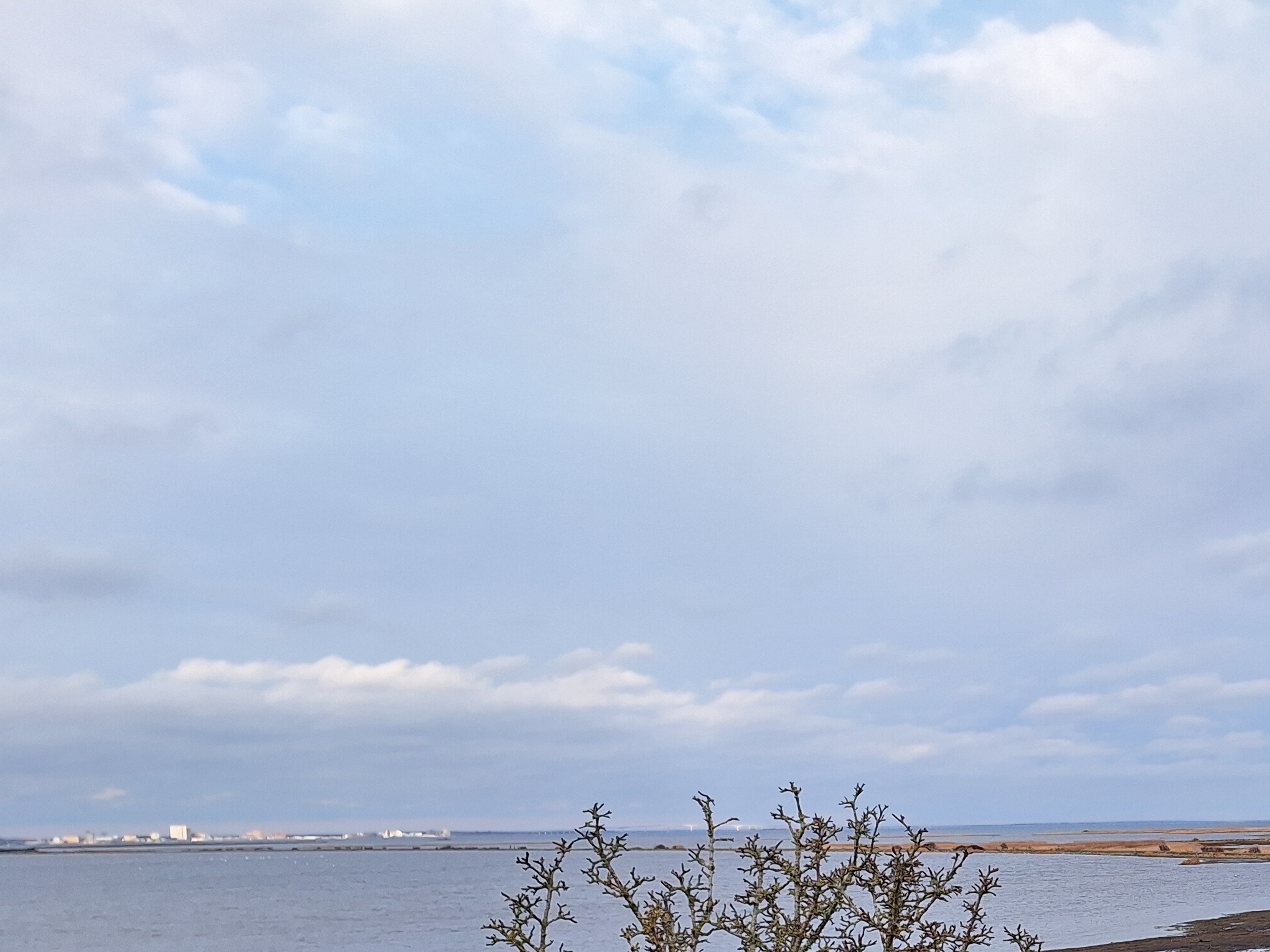
Picture from the Swedish island of Öland, Beijershamn Nature Reserve.
Over the weekend, after the conference, we went to the island of Öland and visited a test site in a nature reserve where I had processed satellite data within the project to map eelgrass. We climbed a bird-watching tower to get an overview of the area as shown on the left, and then we went to another site north of Kalmar where we’d previously purchased WorldView data and saw the seaweed growing on the rocks as shown at the top of the blog.
We also met with local stakeholders/collaborators to ensure we understood their needs and what they wanted the project to focus on.
I’m now back in Stockholm for a week, and on Thursday I am giving a seminar presentation at Stockholm University, as part to their Marine Ecology seminar series.
The second half of my Scandinavian Winter Road Trip takes me to Finland this weekend for next week’s 14th Workshop on Hyperspectral Image and Signal Processing: Evolution in Remote Sensing (WHISPERS) conference in Helsinki, and I’ll tell you all about that in a blog later this month!
