

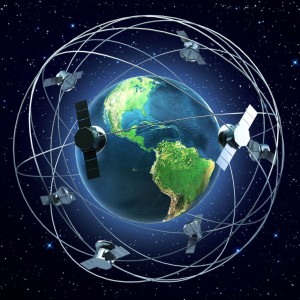
Artist’s rendition of satellites orbiting the Earth – rottenman/123RF Stock Photo
After looking at China in the previous blog, this time we’re highlighting the latest space capability developments within the UK and a few things have happened in the last week.
Firstly, last Friday the UK launched Space Command – whilst sounding a little like it should be a children’s puppet TV series, it is a space command centre aimed at protecting the UK’s interests in space and tracking any threats to those interests. Once fully operational, Space Command will be in control of all the UK’s space capabilities. The Government also announced that it was intending to spend an additional £1.4 billion on space capabilities over the next decade, which will cover areas such as:
- Space operations;
- Space workforce training and growth; and
- Space capability to develop and deliver space equipment programmes
Based at RAF High Wycombe, Space Command will be jointly operated by the Army, RAF and Royal Navy; and its first eight members are six members from the RAF, a British Army Officer and an exchange officer from the USA.
Space is becoming an increasingly important area for Governments, given the role that space technology and services play in everyone’s day-to-day lives. Space Command follows the establishment of the USA’s Space Force by former President Trump in 2019. It will lead the UK’s participation in the Combined Space Operations initiative that will include five further nations besides the USA: Australia, Canada, France, Germany and New Zealand. The initiative seeks to improve cooperation, coordination, and interoperability opportunities in space to ensure a safe, secure and stable space environment.
The second announcement last week was the passing of the legislation enacting the UK’s spaceflight regulations, which provides the framework to regulate the UK space industry and enables launches to take place from this country for the first time. It is hoped that the first satellites will be launched from UK spaceports next year, and the Government also announced further financial support:
- £31.5m to help set up vertical launch services from Scotland, including £5.5m to build a new rocket to launch from Sutherland;
- £7.35m will go to Spaceport Cornwall to support a horizontal launch facility with Virgin Orbit;
- Business plans will also be created for suborbital flights from airports in Scotland, Wales & Cornwall;
- £99m to be invested in a new National Satellite Test Facility in Harwell; and
- £60m will be put towards developing a revolutionary hybrid air-breathing rocket engine.
Finally, on the 30th July, the Eutelsat Quantum UK-built satellite was launched from French Guiana onboard Ariane 5. The satellite, which was built by Airbus and Surrey Satellite Technology (SSTL), is a new type of satellite that is capable of being reprogrammed and reconfigured to cope with changing requirements. Until now, large satellites were configured on the ground with specific instruments for specific tasks, whilst this new satellite can change coverage, bandwidth, power and frequency whilst in orbit meaning that the satellite functions can be switched between services such as broadcasting TV, enabling data protection and recovery, to delivering broadband to air passengers, etc.
The UK Space Agency has invested £65 million in Eutelsat Quantum, through the European Space Agency, in addition to an expected £170 million from the UK industry. Users are expected to include governments and commercial entities and it will offer coverage of the Middle East and North Africa region, stretching into Europe, Africa and Central Asia.
Whilst as we said last week, China is the world’s powerhouse for Earth Observation, the UK is not standing still and is looking to enhance and develop its own space and satellite capabilities. It is an exciting time to be part of the space industry!
