

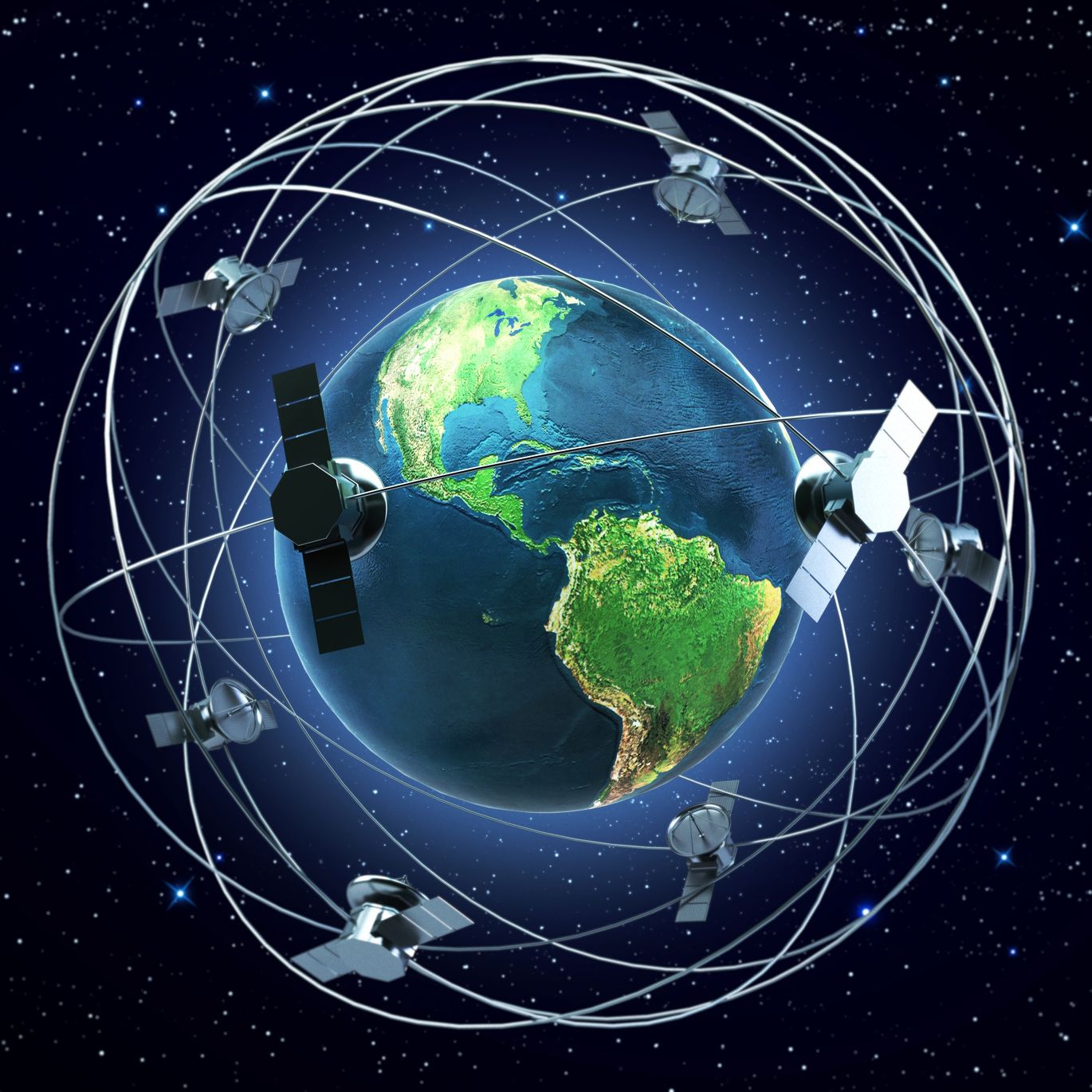
Artist’s rendition of satellites orbiting the Earth – rottenman/123RF Stock Photo
Following last week, where we talked about the growing satellite broadband constellations, this week we’re looking at the latest update on the number of satellites currently orbiting the Earth.
The information in this blog is based mostly on the data from the Index of Objects Launched into Outer Space, that is maintained by the United Nations Office for Outer Space Affairs (UNOOSA) and supplemented by the Gunter’s Space Page for 2025 missions, to give the numbers at the end of March 2025.
How many satellites are orbiting the Earth?
There were 14 904 individual satellites orbiting the Earth at the end of March 2025 according to these sources; a large 31.54% increase since June 2023 when we did the last of these updates.
It’s quite difficult to determine the exact number orbiting the Earth on a particular day, as every few days there is a new launch and there are also satellites that come back to Earth regularly – as we discussed last week about Starlink. The oldest satellite still in space is the USA’s VANGUARD 1, which was launched on the 17th March 1958.
Not all satellites launched end up orbiting the Earth, some go further into space and end up orbiting the moon, the sun, comets, or other planets and their moons. According to UNOOSA figures, there are currently 111 satellites that are orbiting objects other than the Earth.
How many objects have ever been launched into space?
There are 20 985 objects that have ever been launched into space. The table below shows the annual events since Sputnik was launched in 1957:
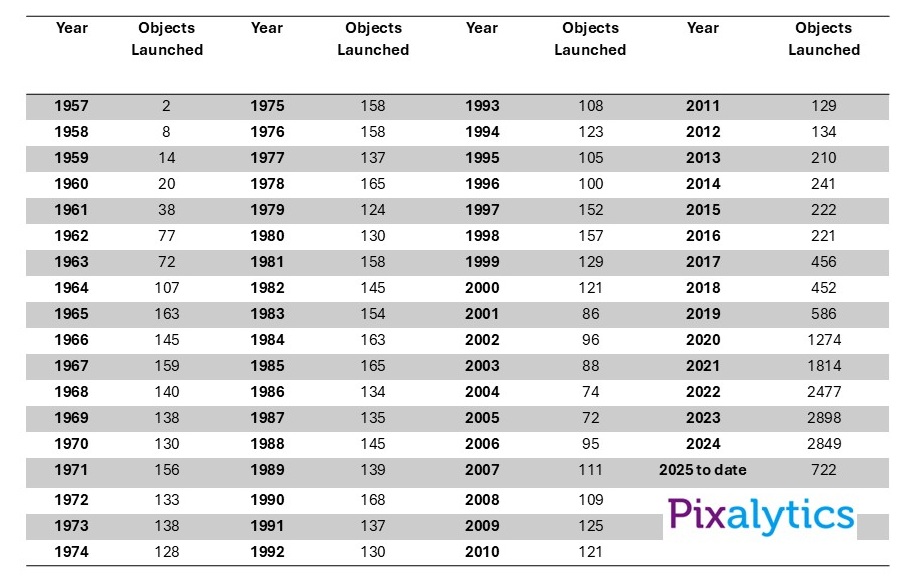
To give some context for how the space sector has developed recently, the increase in launches over the last decade is evident from these annual figures. In just the last five and a bit years (2020 onwards), there have been 11 951 launches – this means that 56.95% of objects ever launched in space have taken place in the last 63 months! In the previous 63 years there were only 9 034 objects launched. Let that sink in a second, the space industry has grown more in 63 months, than in the previous 63 years!!
Given the level of increase, and the discussions last week on satellite broadband, it is unlikely that this progress will slow anytime soon. The last three years have seen the top three number of launches in any year in history, and with 639 launches in the first three months of 2025, it is likely that this year will also be up there with those leaders.
Reasons for this Growth in Space Sector
The two main reasons driving this growth are the development of CubeSats and smaller satellites, together with the ability to deploy these in constellations.
When Sputnik was launched it only weighed 183.9 pounds, but then satellites started getting heavier and heavier. For example, the Earth Observation satellite Envisat was the size of a double decker bus and weighed 18 102 pounds at launch. Satellites of this size cost a lot to build and launch, with Envisat’s launch estimated to cost €140 million, and this certainly limited growth in satellite numbers. However, in the late 1990s there was a lot of work to develop smaller satellites, which began with the birth of the CubeSat – this is a type of satellite built in 10 cm cubes which only weigh 4.4 pounds – and satellites were built comprising of single, or multiple, cubes. These are obviously cheaper to build and launch – with the current launch cost of a CubeSat estimated to be between $50 000 and $150 000. The first CubeSats were launched in June 2003.
Shrinking size did not stop at CubeSats as, for example, there are also:
- Picosatellites weighing at less than 2.2 pounds, and
- Femtosatellites weighing only a few ounces.
The development of these smaller satellites allowed companies to start launching multiple satellites together in constellations or having multiple launches and joining them together in constellations. The most famous of these is obviously SpaceX’s Starlink constellation with, in excess of 7 000, but there are others such as Planet’s EO constellation has over 150 satellites in orbit, and there are many, many more.
In addition, the development of CubeSats has also democratised space, with many more countries launching satellites, rather than the historic powers. China has a very active space industry and have significantly developed their presence with regular launches.
All of the orbiting satellites are working, aren’t they?
While you are probably thinking that it’s amazing that we have almost 15 000 satellites are orbiting the Earth, not all of them are working. There are a significant number that have gone wrong, run out of fuel, or got to the end of their life.
Unfortunately, UNOOSA don’t maintain information on operational satellites. Historically the Union of Concerned Scientists (UCS) kept a record of these, unfortunately this has not been updated since 2023 and as you can see information changes fast in this area. While, it is not possible to give an exact figure on the number of working satellites currently, from previous work we have done over many years, we would estimate that approximately only 70% – 75% of orbiting satellites are operational. This does mean that there are almost 4 000 useless metal objects above our heads travelling at up to 28 000 kilometres an hour!
Historically, there was not a huge amount of thought given to bringing satellites back to Earth after their mission ended, and they were simple left up in space or expected to go into a decaying orbit and eventually come back to Earth. For example, last week, the Russian Kosmos 482 satellite which, broke up into four pieces in Earth’s atmosphere, has now returned back, it is believed to have landed somewhere in the Indian Ocean; this satellite was launched in 1972 and so the return journey can take time!
Thankfully, now, most satellites have fully worked up plans to deal with their end of life. Many of the CubeSats burn up in the Earth’s atmosphere as they return, and most others have a controlled re-entry to ensure they come down away from populated areas – although there are still the uncontrolled ones like Kosmos 482. There are also many plans and ambitions to bring some of the dead satellites back to Earth, and while there are many ideas and prototypes, there is not a system yet that can do this.
When you next look up at the night sky ….
Remember that alongside all of the amazing stars there are thousands of active, and inactive, satellites orbiting the Earth and this number is increasing.
