

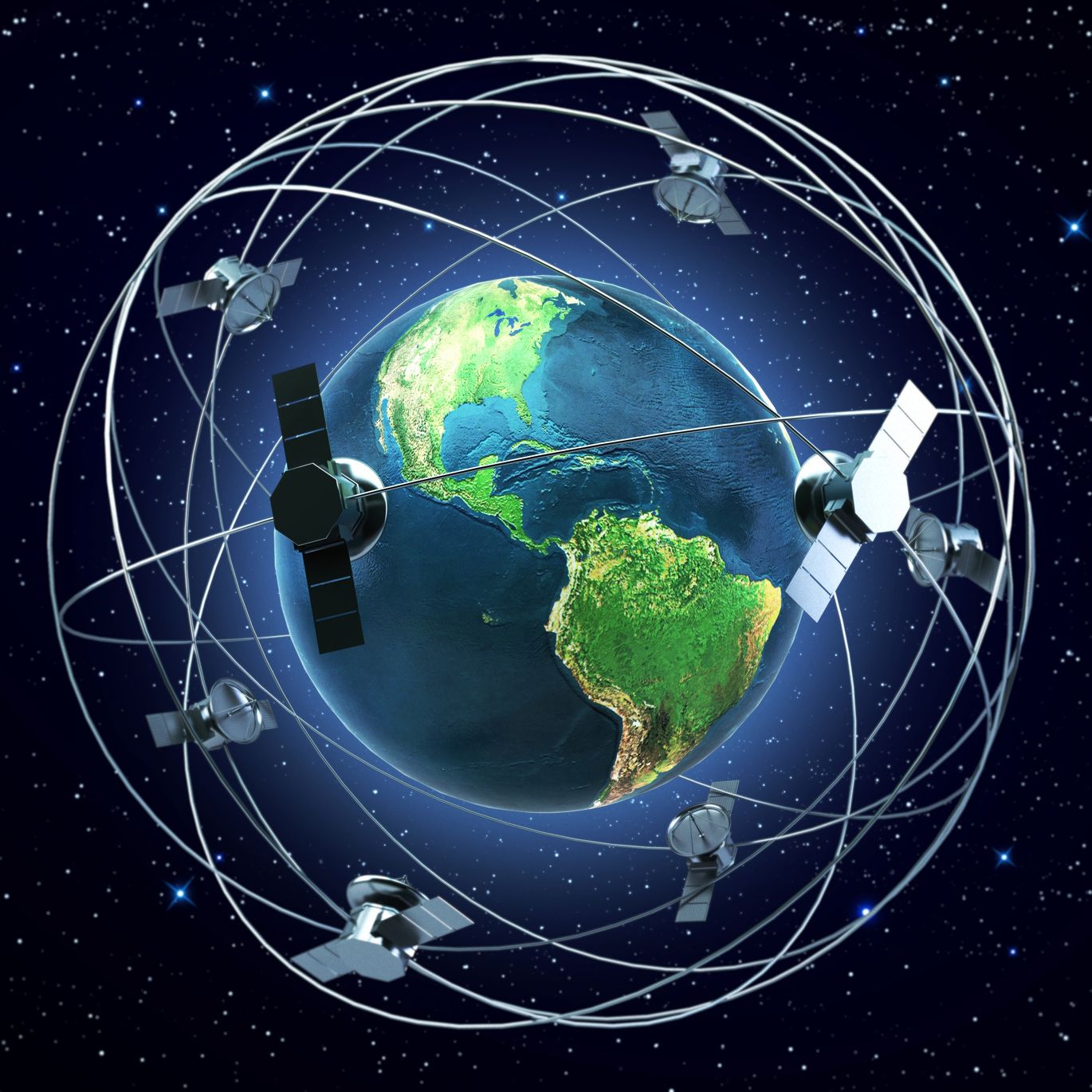
Artist’s rendition of satellites orbiting the Earth – rottenman/123RF Stock Photo
We know Brexit only happened twelve days ago and whilst little has practically changed due to the transition arrangements, there have already been interesting developments for the UK Space Industry. Yes, really!
On the 3rd February, the European Commission adopted a recommendation to authorise the opening of negotiations for a new partnership with the United Kingdom of Great Britain and Northern Ireland – essentially the beginning of phase two of the Brexit negotiations. Within this thirty-three page document was a reference to the space industry, and specifically the Galileo programme.
We’ve written a number of times previously about the fact that Galileo, and Copernicus, are essentially European Union (EU) programmes, and only companies who reside within the EU are allowed to bid for the work – something that seemed to surprise the Government, more than the industry when it came out a couple of years ago.
Current Government advice, published last August, indicated that following Brexit the UK will not be able to:
- use Galileo – Europe’s Global Navigation Satellite System (GNSS) – including the future Public Regulated Service (PRS) for defence or critical national infrastructure,
- have access to the encrypted Galileo PRS,
- be able to play any part in the development of Galileo.
Or so we thought! Within the Annex of the European Commission Recommendation, there are two paragraphs specifically on Space. These note that the envisaged future partnership between the UK and the EU should:
‘provide for the possibility for the UK to have access to the Galileo Public Regulated Service (PRS) through provisions on PRS in accordance with Union law. Such provisions on PRS should allow the United Kingdom to secure access to the most resilient service of Galileo for sensitive applications in the context of Union operations or ad hoc operations involving its Member States.’
No-one should get too excited here as any involvement in the development of Galileo and associated contracts are explicitly excluded. In addition, potential access will be dependent on the UK not contravening the security interests of the EU and its member states, together with the UK participating in the non-security related activities of Union’s Space Programme, and granting the EU access to any future UK owned GNSS.
The last point provides a fascinating backdrop to the potential UK GNSS. This project was a big announcement by the Prime Minister following the realisation that the UK would be shut out of the Galileo PRS service. It was announced that if we couldn’t use their system we’d build our own! After all, UK companies were instrumental in the development of Galilieo. A £95 million scoping exercise was started around a year ago and is due to publish its findings next month. However, even though a lot of the knowledge used to create Galileo is within the UK, establishing our own system will cost billions and likely to take at least a decade or more to become operational.
So, will the EU offering Galileo PRS usage change the ambitions of any UK GNSS? The Prime Minister has pushed UK space, and even Earth Observation, in a number of speeches to demonstrate the technological strength of the country in this high-tech industry. However, this development is a huge cost and is generally considered within the industry to be unlikely, and was simply a bravado announcement as part of the campaign to get Brexit done!
There was nothing in the European Commission document about Earth Observation. Although, there are lots of ongoing discussions about our future participation in the Copernicus programme. It is interesting that things the EU said won’t happen for Galileo, are now being held out as potential opportunities. Will anything happen for Copernicus? Who knows?
Finally, it’s worth noting that last Friday, the UK firm OneWeb successfully launched 34 satellites from the Baikonur Cosmodrome in Kazakhstan aboard a Soyuz rocket. These will join an existing low-Earth orbit constellation launched last year as part of the OneWeb’s satellite broadband programme, which is initially expected to number six hundred and forty-eight. The company hopes to offer global broadband coverage next year.
Certainly, it’s an interesting time to be part of the UK Space Industry!!
